How to map a department in two weeks without a workshop marathon
A field manual with the invitation, a conversation script, and a note template. Two weeks, one process, no sticky notes promoted to the truth.
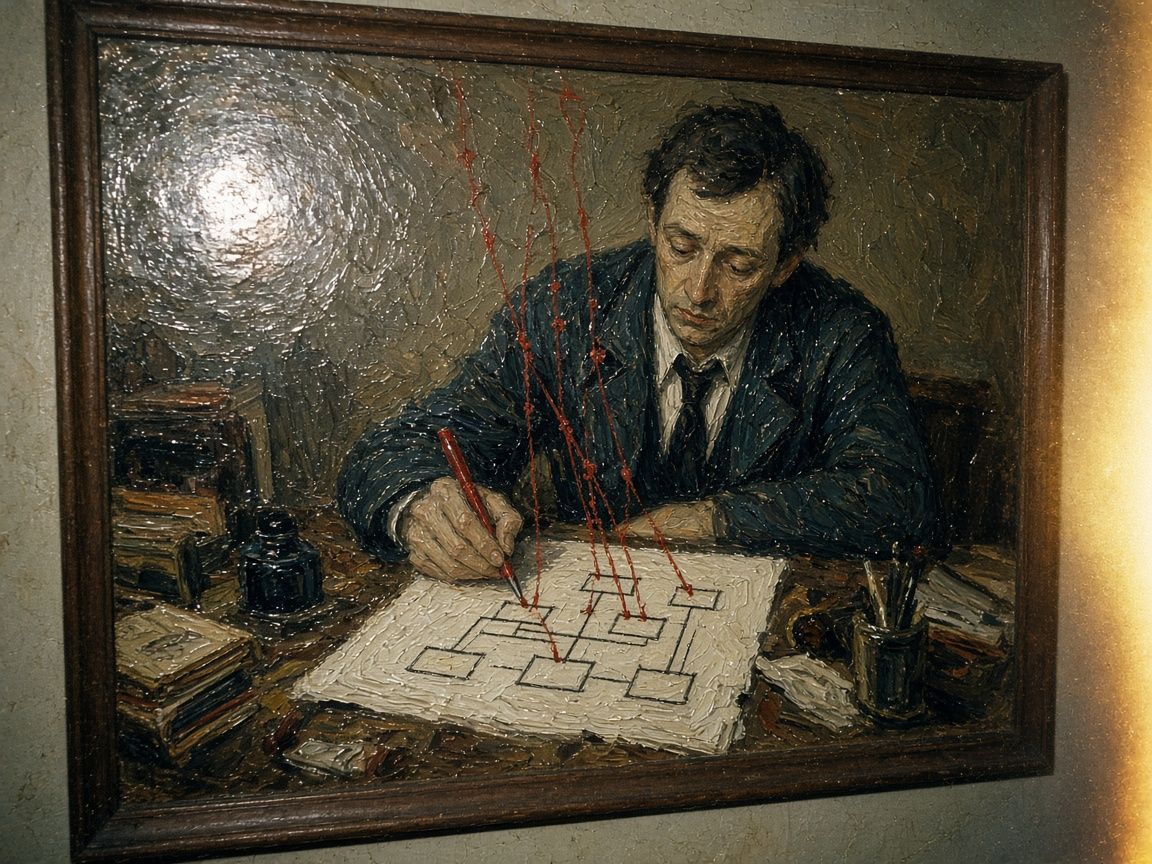
Two weeks is enough to see one process in one department, if you stop gathering people in a room. The workshop feels efficient because everyone is there. It is often the opposite. The person who talks most draws a process the others nod at, and the exceptions stay in the head of the person who does the work.
This piece is a field manual for the guide. It gives you the invitation, the questions, and the notes. It does not give you a figure for what the mapping “should” cost. That figure is not here.
Before you book anyone
Write three lines and stop.
- The name of the process, the way people say it, not the way the intranet says it.
- Start and end. One sentence each.
- The owner’s name. If you are the owner, write that. “We” is not a name.
List five to eight people who touched the case last week. At least one per handoff. If the list is only managers, the list is wrong.
Say out loud what you will not map. The neighbouring process can wait. A map that tries to be the whole department becomes a wall.
The invitation
Send it yourself, short, to each person. Not through a project assistant who turns it into a programme.
Hello. I need 40 minutes to understand how [the process] actually runs, not how the procedure says it runs. I will ask about the last time, and about what usually goes wrong. You do not need to prepare. The notes will be read back to you before they stand. Say if the time is a bad one.
The last sentence is there on purpose. People who cannot say no will tell you the happy path.
In the conversation
Sit with one question at a time. Write while they talk. Do not correct them toward the procedure.
Use this sequence, and skip what has already been answered.
- Tell me about the last time this case came to you. What was it, and where from?
- What did you do in the first five minutes?
- Which screen, which email, or which sheet did you open?
- Where did it sit, and who pushed it on?
- What did you check twice, and why?
- What is the usual exception? Tell me about one.
- What do you wish the previous person had finished?
- When do you know you are done, and who thinks you are not?
When they say “it depends”, that is not a closing answer. Ask: depended on what, last time? Two variants are a finding. Draw both. Do not ask them to agree in the room. Agreement can wait for the read-back, and sometimes it should not come. Two real paths are better than one invented one.
If the conversation drifts into the whole working week, bring them back: “Let us stay with this case.” You are mapping a process, not a job.
The notes
One row per step is enough. Do not write minutes.
| Field | What you write |
|---|---|
| Step | The verb they used. “I chase approval”, not “approval process”. |
| Who | The role, and the name in brackets. The name can leave. The role has to remain. |
| Where | The system as they said it. The official name can go underneath. |
| Wait | Minutes, hours, days, or “unknown”. Not a tidy average you invent afterwards. |
| Exception | One concrete case. |
| Quotation | One sentence you can read back. |
A template, not a case. The table is a way to take notes. It is not taken from an engagement.
After each conversation, take ten minutes alone before you move on. Strike what you added to make it hang together. The gaps should stay visible.
The read-back
The same week, fifteen minutes, with the people you spoke to. Show the map. Do not defend it.
Ask in this order:
- Which step does not exist?
- Which step do you do in a different order?
- Which exception is missing?
- Where have I written a wait you do not recognise?
Correct it while they watch. A map that will be “updated in the next version” does not get updated.
What you do not do in these two weeks
- You do not hold a kickoff with everyone in the room to “align”. The alignment is that the owner has said the conversations are work, not a side project.
- You do not buy a new drawing tool for the occasion. Use what you will still be able to open in six months.
- You do not build a scoring model for which steps are worst. Without your own figures, the scores are decoration.
- You do not promise an AI pilot at the end. You promise one change, or an honest decision not to make one.
Friday of week two
You are finished when four things sit in a file you own:
- The map on one page.
- The exceptions, with the name of who knows them.
- One change, with an owner and a date.
- The date you will look at the map again. Set it before you leave.
If the file sits in a consultant’s template, or in a tool only the project manager has a licence for, you are not finished. You have only moved the map.
More on what happens afterwards: why process maps die in a drawer.