What you actually pay for in a consulting process-mapping project
A meeting room, a photographed whiteboard, and a pyramid of billable hours. What a mapping engagement looks like from the inside, and what to ask before you buy one.
You are about to buy a picture of how the company works. The picture is worth having. The usual way of making it is not.
People who have run these engagements describe the same shape. One or two senior managers or directors come in. They take your people’s best hours, in the middle of the day. You get a report. The hours were the product.
This is not a case against mapping. Mapping is one of the most useful things a company can do, and it is boring for almost everyone who has to sit through it. The aim is to make it as light as possible, and to leave the knowledge with the people who already do the work.
What happens on the day
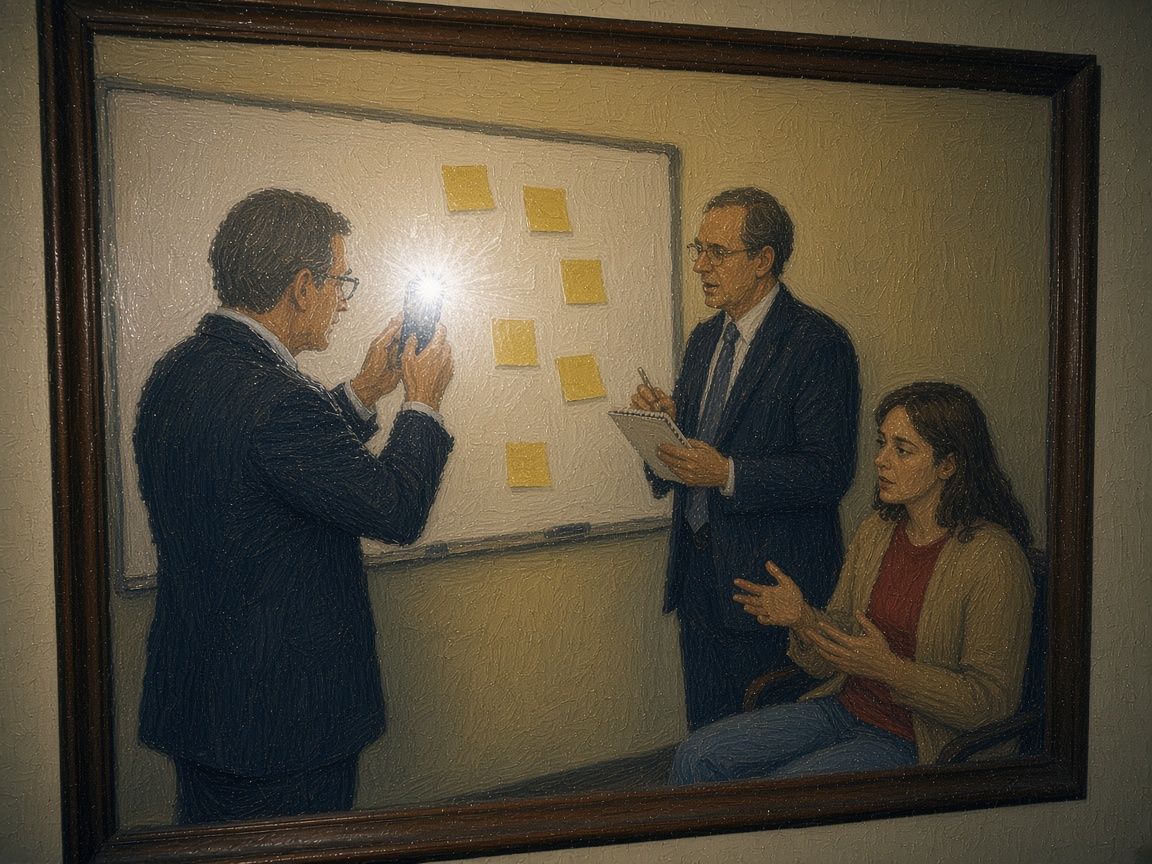
A meeting room. A whiteboard. Sticky notes. Someone points. Someone talks. The people who do the work are interviewed, in the hours when they would otherwise be doing it.
People who have run the projects put that time at about two to three hours per person mapped. That is not a published benchmark. It is the day as they describe it.
The seniors are the ones in the room. They are the ones your team meets.
What happens in the back room
When the flow is on the board, the consultants photograph it.
The photo leaves the room. Behind the glass, a group of associates transcribes the notes and builds the slides. They bill the hours while they do it.
You were not in that room. Your people were not in that room. The photograph is the handoff, from the conversation you paid to sit through, to the production of a deck.
What you get
Juniors do the work on the report. Seniors bring it back.
What comes back is an account of the things that can go wrong, and perhaps some guidelines for fixing them. It is a record of the workshop. It is not, by itself, a change in how the work runs on Thursday.
If the maps live only in that file, you rented the picture. You did not keep it.
What it costs
People who have run these engagements in Norway describe a typical range of NOK 800,000 to 1.5 million. For that, you may get a small team mapped. Four or five people.
That is their account of a typical engagement. It is not a survey, and it is not a quote for your company. If you have a number in front of you, use that number. The calculator adds up the hours and the fixed price you type in. It does not look up a market rate.
Why the model works against you
The work is top-down. A few senior people sit with you. A larger group is behind the glass, turning the photograph into slides. The whole thing runs as a pyramid.
The pyramid is paid by the hour. An hour you get back is an hour they do not bill. The incentive points the wrong way. Billable hours give you no advantage. They pay the firm for staying in the work, not for leaving you able to carry it.
You can still buy help. You should not buy a structure that earns more when your people stay dependent.
What to do instead
Map from the bottom. Each person describes their own workflow. The picture is built by the people who know the exceptions, not from a sample taken at midday and photographed.
Then keep the skill in the company. The people who already hold the domain knowledge need the tools, and the practice, to draw the map, keep it, and change it. Domain knowledge plus tools is the strong combination. Tools without that knowledge make a tidy fiction. Knowledge without a file you control walks out with the firm.
Mapping matters because the company works inefficiently in particular places. That is where the value people attribute to AI actually sits: in a bottleneck you can point at. Time freed up is a bonus. The larger gain is removing the blockage, because that is what lets the work grow.
Keep the mapping light. It is boring. A long workshop taxes that boredom. A short conversation, read back the same day, is enough to start. The guide is that sequence.
Before you sign with anyone, ask this:
- Who will actually do the work on the report, and who will we meet?
- Do we keep the maps in a format we can edit without you?
- How many hours of our people’s time, and in which part of their day?
- What is in our hands the day you leave, besides a slide file?
- What happens to the price if the scope grows?
The comparison sets hourly consulting next to AI tools and doing it yourselves. Vevd is one column on that page, and the sponsor of this site. It is not the answer. Read what they publish about price and guarantee, then decide on the questions above.
Questions
How much of our people's time does a consulting mapping day take?
People who have run these engagements describe about two to three hours per person mapped, in the middle of the working day. That is their account of the shape of the day, not a published standard.
What do we actually receive?
A report. Junior staff usually build it from a photograph of the whiteboard. Senior staff bring it back. It lists what can go wrong, and perhaps some guidelines for fixing it. Ask whether you can edit the maps after they leave.
What does a project like this typically cost in Norway?
People who have run them describe a typical range of NOK 800,000 to 1.5 million, often for a team of four or five people. That is not a survey and not a quote. Use the number you were given.
What should we ask before we sign?
Who will actually do the work, whether you keep the maps in a format you can edit, and how many hours of your people's time the project takes. If the answers are vague, the pyramid is what you are buying.